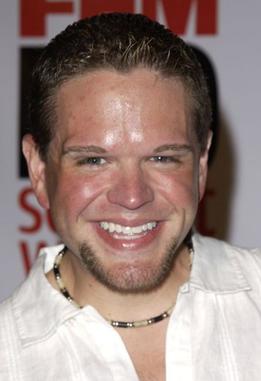
Ron Lester's Weight Loss Journey: A Career-Defining Dilemma?
The entertainment industry is notoriously tough, often demanding actors fit specific molds, especially when it comes to physical appearance. For actor
Ron Lester, best known for his unforgettable portrayal of the lovable, oversized offensive lineman Billy Bob in the 1999 hit film
Varsity Blues, his physical stature was not just a characteristic, but the very foundation of his early career. However, a dramatic and life-saving weight loss transformation would later lead him to ponder a profound question: Did shedding hundreds of pounds ultimately cost him his acting career? This article delves into the fascinating and often heartbreaking trajectory of Ron Lester’s life, exploring the complex interplay between his health, his public persona, and the unforgiving nature of Hollywood.
The Rise of a "Funny Fat Guy": Ron Lester's Early Stardom
Before his iconic role in
Varsity Blues,
Ron Lester began carving out a niche in Hollywood. Audiences might remember his early on-screen appearance in Nickelodeon's
Good Burger, alongside Kenan Thompson. He quickly became recognizable for his larger-than-life presence and comedic timing, which lent itself perfectly to roles like Michael "Sugar Daddy" Bernardino on the popular WB series
Popular and a memorable bully on the cult favorite
Freaks and Geeks.
It was his role as Billy Bob in
Varsity Blues, however, that truly cemented his place in pop culture. Wearing jersey number 69 and a perpetual cowboy hat, Lester's character resonated with audiences for his vulnerability, humor, and that unforgettable "puke and rally" moment during a drunken night. His physical size, reportedly over 500 pounds at the time, was central to the character's appeal and his comedic persona. This defining role even led him to spoof his own character as Reggie Ray, another number 69 offensive lineman, in the 2001 parody film
Not Another Teen Movie. For a time,
Ron Lester had found his unique selling proposition – he was the quintessential "funny fat guy," a beloved character actor with a distinct look that set him apart.
The Decision to Transform: Gastric Bypass and Its Immediate Aftermath
Despite his on-screen success,
Ron Lester was battling severe health issues off-screen due to his extreme obesity. Weighing over 500 pounds posed significant risks to his longevity and quality of life. In December 2000, Lester made a life-altering decision: he underwent gastric bypass surgery. The procedure itself was not without peril; according to reports, he flatlined on the operating table, a terrifying testament to the seriousness of his condition and the risks involved in such a major operation.
The surgery proved to be incredibly effective in the short term. Within just two years,
Ron Lester had lost an astounding 349 pounds, transforming his physical appearance dramatically. This significant weight loss brought about a renewed sense of health and, initially, optimism. He publicly stated, "The difference is that I am no longer the ‘funny fat guy.’ I sold my ‘niche’ for my chance to live… I would never trade the life I have now with… the endless opportunities I have in store for me, with my old life." This statement reflected a hopeful outlook on his new lease on life, prioritizing health over the career niche he once occupied.
The Unintended Consequences: A Career in Flux
While Ron Lester’s physical transformation was a personal triumph for his health, it ushered in an unexpected professional dilemma. Hollywood, notorious for typecasting, struggled to place the "new"
Ron Lester. No longer able to fill the role of the "funny fat guy," casting calls for the types of roles he had perfected began to dry up. The very characteristic that had made him unique and marketable in his early career was now gone.
Lester himself articulated this heartbreaking realization in a candid interview, stating, "Did I throw away my career to be skinny? Yes." He went on to express a poignant regret: "I wouldn’t do [the surgery] again. I would much rather have died happy, rich, and kept my status and gone out on top." This stark reversal of his earlier optimistic statements reveals the profound personal cost of his decision. It highlights the brutal reality for many character actors: once a niche is established, deviating from it, even for vital health reasons, can jeopardize future opportunities. His iconic turn as Billy Bob is often what fans remember most, a testament to the indelible mark he made in that specific role. For more on his impact, you might be interested in
Ron Lester, Varsity Blues Star, Dead at 45: Remembering Billy Bob.
It's a stark reminder that while health is paramount, the entertainment industry operates on different metrics. Actors are often seen as commodities, and a drastic change in appearance, even for the better, can be perceived as a loss of brand identity. For
Ron Lester, the industry's inability to see him beyond his original "funny fat guy" persona meant a significant decrease in acting roles, leaving him in a professional limbo that underscored the trade-off between personal well-being and career longevity in a physically demanding industry.
Beyond the Spotlight: Health Struggles and Later Years
Despite the career setbacks,
Ron Lester continued to pursue his passions. He was reportedly living in Dallas but traveled frequently to visit his fiancée, Jennifer Worland, in Los Angeles. Even while contending with significant health problems in his later years, he remained creatively ambitious, actively trying to secure funding for a movie he was deeply passionate about, titled "Racing Legacy."
Sadly, his health struggles persisted. In late 2015, Lester was hospitalized due to issues with his liver and kidneys. Though he tweeted in November of that year that he was "starting to heal," confirming that he "came close to dying" and crediting his fiancée for saving his life, his condition ultimately deteriorated.
Ron Lester passed away peacefully on June 17, 2016, at the age of 45, due to complications from liver and kidney failure. His agent, Dave Bradley, confirmed he was not in pain and was surrounded by loved ones. His battle with these severe conditions, likely exacerbated by his lifelong struggle with obesity, even after the gastric bypass, serves as a tragic reminder of the long-term impact of extreme weight on the body. For more details on his final days, read
Ron Lester's Final Battle: Liver & Kidney Failure at 45.
Conclusion
Ron Lester's journey is a poignant and complex narrative about the choices individuals face when health and career paths diverge dramatically. His transformation from the beloved "funny fat guy" to a healthier, thinner individual came with an unforeseen professional cost, highlighting Hollywood's often rigid expectations and the challenges actors face when their unique selling proposition changes. While his decision for gastric bypass surgery was undoubtedly life-saving in the short term, it also left him feeling that he had sacrificed his career zenith.
Ultimately,
Ron Lester's story serves as a powerful testament to the intricate balance between personal well-being, public identity, and professional aspiration. His legacy endures through his memorable performances, particularly as Billy Bob, a character who continues to resonate with fans, reminding us of the actor who bravely navigated the spotlight and the shadows of a profound personal transformation. His life underscores the often-unseen struggles behind the glamour of entertainment, leaving us to ponder the true cost of fame and the profound impact of life-altering decisions.